Bongkasa, todaysSpill.com
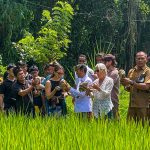
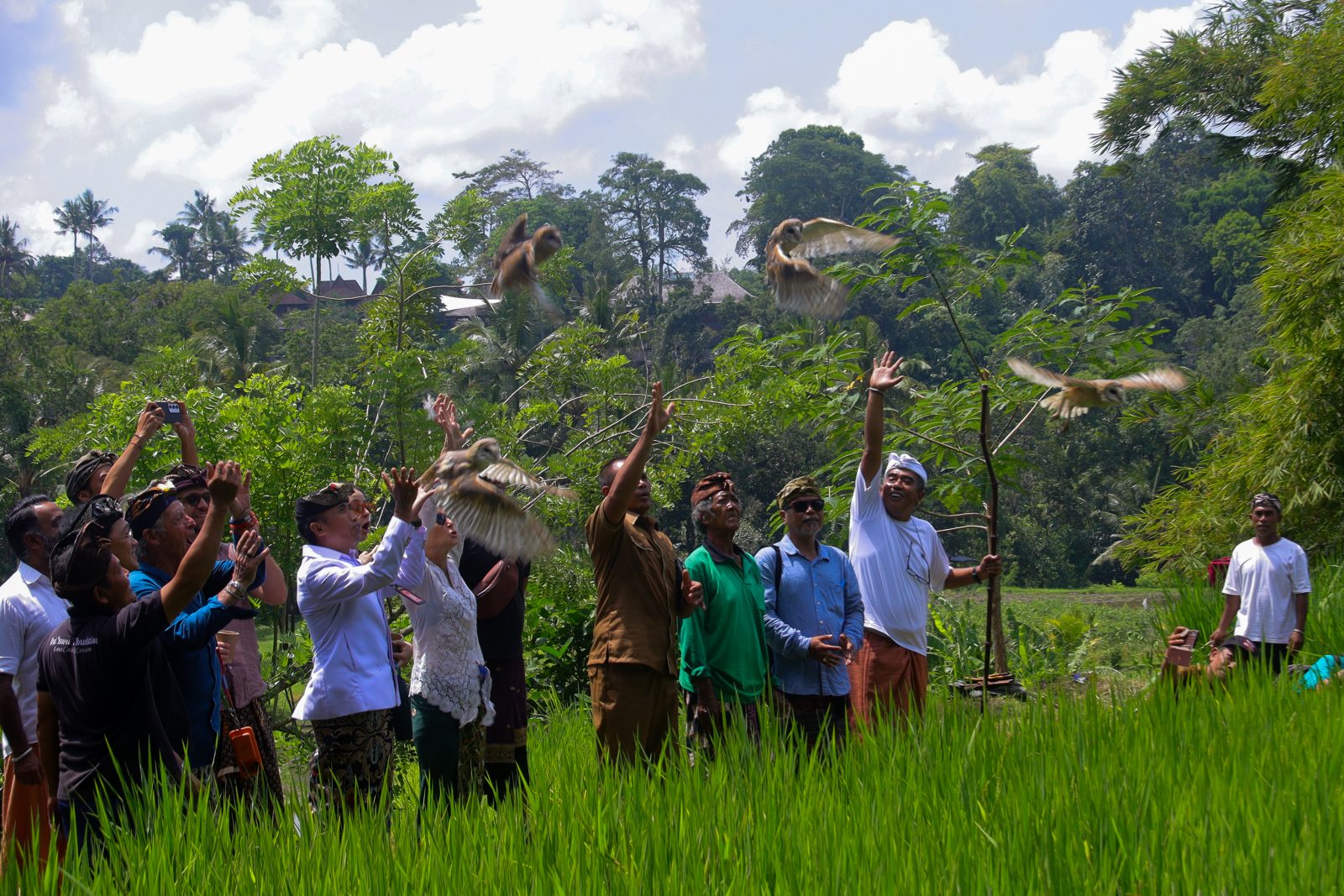
Efforts to preserve the environment and protect Bali’s agricultural landscape continue to strengthen through multi-stakeholder collaboration. Bambu Indah, a renowned eco-luxury resort in Ubud recognized by TIME Magazine as one of the World’s Greatest Places and ranked No. 3 globally by Tripadvisor as a One of a Kind Hotel, initiated the symbolic release of eight barn owls (Tyto alba) at Pura Dalem Wantilan, Bongkasa Village.
This initiative represents a concrete step toward implementing a natural solution to control rat populations in rice fields, while reducing reliance on chemical pesticides. The program is carried out in collaboration with the Owl Tower Bali Foundation, involving academics, local government, and the community.
Representatives and students from Udayana University were present to observe and learn directly from the ecological approach, highlighting the program’s strong educational and environmental value.
The event was attended by Bambu Indah owners John Hardy and Cynthia Hardy, their son Orin Hardy, and Bambu Indah Director Ratheesh Raj. Also present were Abiansemal District Head Ida Bagus Putu Mas Arimbawa, Bongkasa Village Head I Gusti Agung Sumajaya, Traditional Village Leader Ida Bagus Gede Sujia Pradanta, Subak leader I Wayan Suambara, representatives of Subak, and Owl Tower Bali Head Astungkara Way.
Barn owls are known as highly effective natural predators of rats, capable of controlling pest populations without harming the environment. This approach not only protects crop yields but also maintains soil quality and ecological balance.
“Rat poison often harms the environment, affecting not only pests but also other organisms,” said John Hardy. “By reintroducing natural predators, we work with nature, not against it.”
The initiative initially covers approximately 40 hectares of rice fields that have suffered crop losses in recent years due to rat infestations. Through this nature-based approach, agricultural productivity is expected to recover without compromising environmental sustainability.
Orin Hardy emphasized that the program goes beyond a technical solution and is part of a broader effort to preserve Bali’s ecological and cultural heritage. According to him, rice fields are not merely scenic landscapes, but living ecosystems sustained by the Subak system for generations.
“As part of the tourism industry, we have a responsibility to protect Bali’s uniqueness,” he stated.
The success of this initiative depends on ongoing collaboration between local communities, environmental organizations, and the next generation of leaders. The students present are expected to become agents of change in advancing sustainable practices.
The community is also encouraged to help protect the owls and their habitat by minimizing disturbances and avoiding practices that could threaten their survival.
Through this initiative, Bambu Indah demonstrates that the tourism sector can play a vital role not only as a user of natural resources but also as a driver of environmental conservation and community empowerment.
The event concluded with a traditional megibung communal meal, symbolizing unity and shared responsibility in preserving Bali’s natural environment.
About Bambu Indah
Bambu Indah Resort – A Living Laboratory & Hardy’s Artisanal Hotel in Bali
Nestled in the Sayan Valley of Ubud, Bambu Indah offers an experience where nature takes center stage. Founded in 2005 by renowned jewelry designer John Hardy and his wife Cynthia Hardy, the resort began with eleven antique Javanese bridal homes collected during their travels.
Over time, the property expanded toward the riverside, featuring stunning bamboo structures that seem to grow organically from the landscape. Each building tells its own story, reflecting Hardy’s vision of blending tradition, craftsmanship, and deep respect for the environment.
Today, Bambu Indah is more than just a place to stay—it is a “living laboratory” where every corner invites reflection, every meal nourishes body and soul, and every experience offers a new perspective on regenerative living.
Resort Highlights:
Located on a forested cliff overlooking rice fields, the resort combines antique charm with thoughtful bamboo architecture. Surrounded by tamarind, cinnamon, palm, and banyan trees, the property extends to a river with natural spring pools. Across the river, guests can enjoy a wooden sauna, an eight-person copper hot tub, and two carved stone cold plunge pools infused with quartz crystals.
Unique Offerings:
The Elevator Sunset Bar (open 08:00–22:00) provides breathtaking views, designed by Chiara Hardy and developed by Elora Hardy (Ibuku).
River Warung serves breakfast (07:30–10:30), lunch with day pass (10:00–21:00), and dinner (17:00–22:00).
Artisanal Homes:
Bambu Indah features 24 uniquely designed residences, each offering comfort with distinctive artisanal style. Every detail reflects a commitment to mindful living and a deep connection with nature. One highlight is the New Moon House, featuring a striking whale-eye silhouette crafted from copper, brass, and bamboo.
Global Appeal:
Guests from around the world are drawn to Bambu Indah’s artisanal and regenerative vision, where thoughtful design and natural cycles guide every detail. Visitors are invited to experience a lifestyle that honors the earth and embraces a slower, more mindful rhythm of living. TS-01