Badung, todaysSpill.com
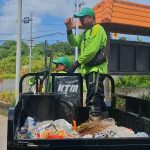
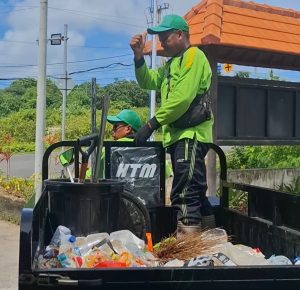
The morning had not fully warmed when a group of men in simple uniforms began walking along the streets of Kutuh Traditional Village. In their hands were garbage bags and metal grabbers. Behind what appeared to be ordinary steps lay a strong determination: to protect their ancestral land from the irresponsible actions of litterers.
Amid Bali’s increasingly alarming waste problem, Kutuh Traditional Village in South Kuta, Badung, chose not to remain silent. The village established a Waste Task Force (Satgas Sampah)—a collective movement that not only cleans scattered trash but also actively tracks down illegal waste dumpers, particularly those coming from outside the village area.

The Kutuh Traditional Village Waste Task Force consists of representatives from each banjar (traditional neighborhood). They work in two shifts, morning and afternoon, patrolling village roads every day. Every finding—from piles of garbage to areas prone to illegal dumping—is immediately reported through a WhatsApp group involving the Bendesa Adat (traditional village head) and kelian banjar. Through this digital space, Kutuh’s environmental conditions are monitored, evaluated, and compared day by day.
Bendesa Adat Kutuh, Jro Nyoman Mesir, revealed that the idea of forming the task force had been on his mind for a long time. Since 2019, when he first served as bendesa, concern over waste scattered along village roads had already emerged. However, the Covid-19 pandemic forced the plan to be postponed.
“At that time, I already dreamed of forming a waste task force. But then the pandemic came, and everything had to be delayed,” Jro Mesir recalled on Friday (26/12/2025).
When he resumed his mandate for a second term, environmental conditions had grown even more concerning. Flooding incidents that recently hit parts of Bali became a serious wake-up call. Waste, Mesir said, could no longer be taken lightly.
“In the end, no matter the reason, this task force had to be realized. We consolidated within the traditional village, took one representative from each banjar, and all the village officials agreed,” he explained.
The task force specifically handles illegal waste—trash dumped indiscriminately on roadsides and vacant land. Meanwhile, paid waste management services remain under the authority of the administrative village (desa dinas). After nearly three weeks in operation, changes have begun to appear. Roads that were once filled with garbage are now gradually becoming cleaner.
However, challenges remain. According to residents’ reports, many illegal dumpers dispose of waste while passing through the area on motorcycles. To address this, Kutuh Traditional Village has prepared an unusual measure: a reward of IDR 200,000 for residents who successfully record or catch perpetrators.
“If there are still no reports, the reward amount may be increased. This shows how serious we are,” Jro Mesir emphasized.
In addition, mobile CCTV cameras will be installed at dumping hotspots, with monitoring access available directly through task force members’ mobile phones. For those caught violating the rules, strict sanctions await: a fine of IDR 1 million imposed by the Traditional Village and another IDR 1 million by the Administrative Village.
Behind these firm policies lies hard work that often goes unnoticed. Each Waste Task Force member receives a monthly salary of IDR 3.5 million, compensation for a job not everyone is willing to do. Cleaning garbage from the streets is not an easy task, both physically and mentally.

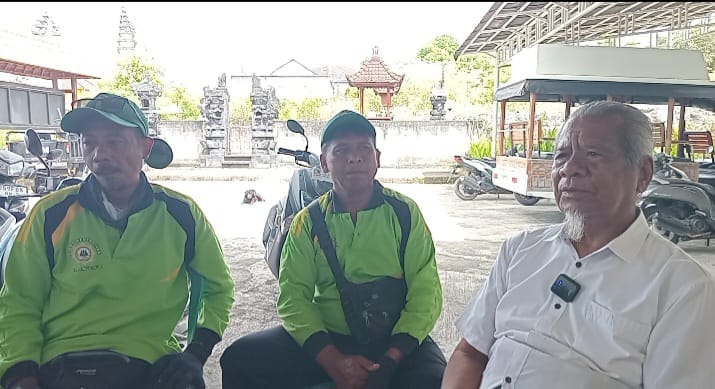
One task force member, Made Astika, admitted that conditions were initially alarming. “At first, the trash on the roads was truly horrifying. But after a few days it began to decrease. After three weeks, public awareness has increased significantly,” he said, accompanied by Nyoman Topik Astana.
Beyond patrols and clean-up efforts, the task force is also actively involved in education—encouraging residents to sort their waste at home so it can be more easily processed at the Kutuh Village 3R Waste Management Facility (TPST 3R). This effort is expected to foster new habits, rather than compliance driven solely by fear of sanctions.
Jro Mesir also invited neighboring areas such as Sawangan, Benoa Sub-district, and Ungasan to take similar collective action. For him, cleanliness knows no administrative boundaries.
“Don’t let Kutuh be clean while its borders remain dirty. This environment belongs to all of us,” he said.
On the streets of Kutuh today, the fight against waste may seem quiet. Yet from the small steps taken by the task force members, a great hope is growing—for a traditional village that is clean, dignified, and worthy of representing the future face of Bali’s tourism. TS-01